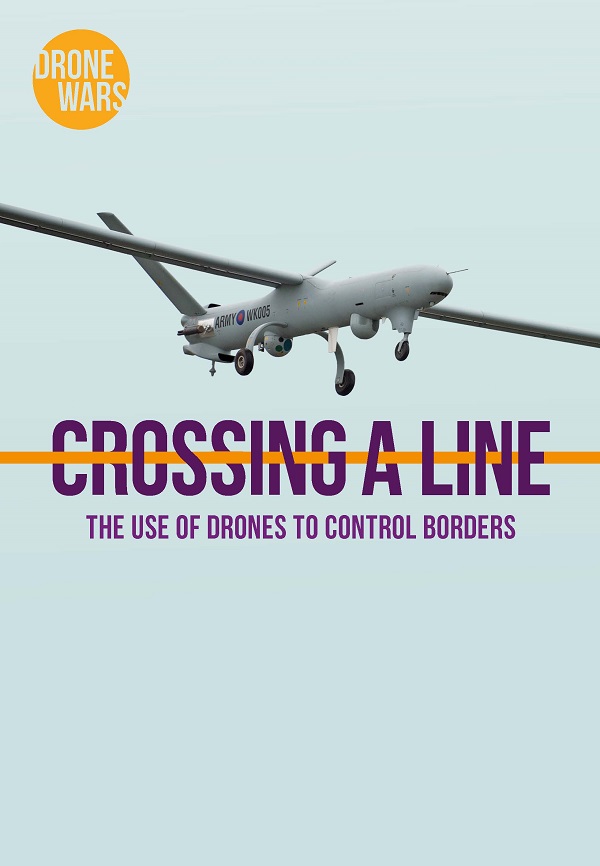
The report highlights five “particular risks resulting from the use of drones in border areas”:
- The risk that drones will increasingly be used for surveillance of the wider population – not just those involved in criminal activities at borders – at ‘upstream’ internal border locations, and not just the geographically-defined border itself.
- The risk that the use of drones, as a primarily military technology, in border control will contribute to the dehumanisation of those attempting to cross borders and increase the potential for human rights abuses.
- The risk that states will use drones, as opposed to crewed aircraft and assets, to evade their humanitarian responsibilities to those in distress.
- The risk that information from unrelated surveillance activities (for example shipping control or traffic monitoring) is passed on to border control and other law enforcement agencies for inclusion into a broader ‘intelligence picture’.
- The risk that, if drones are deployed in a zone where there are border tensions between two nations, there will be a blurring between military and policing roles and a temptation to use drones in spying or intrusion missions which may escalate tensions.
Full report and summary available here: Crossing a Line: How the use of drones to secure borders threatens everyone’s rights (Drone Wars UK, link)