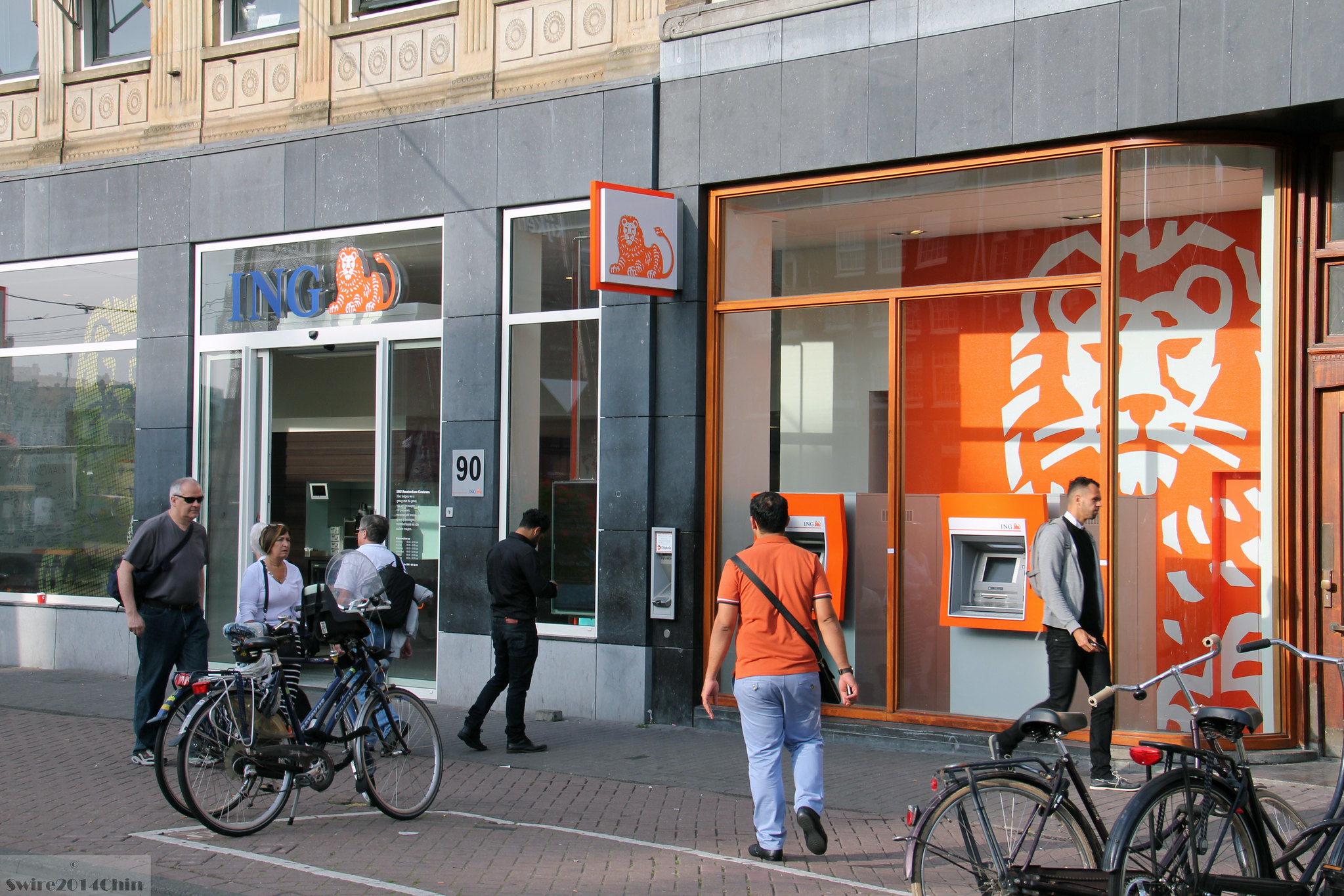
Draft standards for anti-money laundering monitoring by private companies could turn fundamental rights into a “mere illusion”, according to civil liberties organisation Privacy First. The Dutch organisation is calling for a ban on automated risk profiling – the use of software to analyse customer data or behaviour and generate indicators of possible money-laundering risk. Privacy First made the comments in response to draft guidelines prepared by the EU’s new Authority for Anti-Money Laundering and Countering the Financing of Terrorism (AMLA).
Privacy First said the proposals risk creating a “financial surveillance state” that ignores citizens’ fundamental rights. Amnesty International raised similar concerns in June, warning that automated risk profiling in law enforcement, social security and migration can be discriminatory, opaque and difficult to validate.
AMLA’s draft guidelines come under Article 26(5) of the EU Anti-Money Laundering Regulation (AMLR), which requires it to specify how ongoing monitoring should be carried out. The consultation ran from 3 June to 3 September 2026, and AMLA says the final guidelines will be issued in the fourth quarter of 2026. The AMLR will apply from 10 July 2027, with a later start date for football clubs and agents.
The guidelines apply across financial and non-financial sectors, covering customer information and monitoring for unusual or suspicious activity. AMLA particularly invited input from newly covered groups including crowdfunding services, credit intermediaries, certain crypto-asset providers and traders in high-value goods.
What does ‘risk-based’ mean?
Privacy First’s objections go beyond automated risk-profiling. It said the “risk-based approach” running through EU anti-money laundering rules remains too vague. In its consultation response, the organisation said there is “no clarity as to what this actually entails” and argues that AMLA does not give enough practical guidance.
Among its recommendations, Privacy First wants less monitoring of low-risk customers and more focus on high-risk cases. It also said the draft should do more to ensure data minimisation (not requesting more data than is necessary) and consideration of small banks. This is partly because smaller firms may lack the specialist staff, systems and access to information available to large banks. The guidelines could therefore create disproportionate costs and unnecessary data collection for smaller banks, argues the organisation.
In the draft, AMLA describes its approach as technologically neutral. Monitoring may be manual, automated or semi-automated. They say firms should consider algorithms, machine learning and AI where they could improve the identification and escalation of money-laundering risks, but using such technology is “neither mandatory nor, in itself, an indicator of effectiveness”.
The draft also proposes safeguards. There should be avenues for reviewing and appealing decisions; firms should be aware that results can be inaccurate or biased; and tools should be governed to avoid discrimination. Firms should also explain their role and outputs to supervisors, with human oversight where appropriate.
Ellen Timmer, Privacy First’s financial privacy spokesperson, told Statewatch these safeguards will still leave customers vulnerable to over-surveillance. “Automated risk profiling is done by private companies, without any adequate supervision,” she said. “This topic is very much under the radar, but it affects many people.”
Privacy First raised similar concerns last year, when it called for stronger safeguards around automated profiling, including fundamental-rights assessments and independent audits. Its latest response goes further by calling for automated risk profiling in crime detection to be prohibited.
Missed crime or unnecessary suspicion?
A monitoring system can make two basic mistakes: miss genuinely suspicious activity or flag an ordinary customer unnecessarily. Data scientists call these false negatives and false positives. Making a system more sensitive may reduce the first but increase the second, bringing more legitimate customers into reviews or document requests.
Privacy First argued that an effective risk-based approach should mean firms “genuinely downsize monitoring requirements for low-risk customers and focus on high-risk groups”.
‘Testing ground’ in the Netherlands
Privacy First described the Netherlands as a “testing ground” for anti-money laundering controls, where banks have already carried out intensive monitoring.
Dutch banks reported nearly 250,000 unusual transactions in 2020. By 2024, that figure had risen to more than 530,000, according to the Netherlands Court of Audit. The eight banks interviewed deployed around 13,000 full-time equivalent staff on anti-money laundering work in 2024, at a reported cost of around €1.6 billion.
Yet the Court of Audit found that insight into the effectiveness of these checks was poor.
Banks and other reporting entities send transactions they consider unusual to the Financial Intelligence Unit-the Netherlands (FIU-NL), which analyses the reports and decides which transactions to declare suspicious. According to its 2024 annual review, reporting entities submitted 3,484,373 unusual transactions; during the same year, FIU-NL declared 118,408 transactions suspicious.
Those figures are annual totals from different stages of the system, not the same group of transactions moving through a single process. An unusual transaction report is also not necessarily generated by an automated model, and a transaction declared suspicious by FIU-NL is not proof that money laundering occurred.
All these factors make effectiveness difficult to measure. To calculate how often a risk system is going wrong, there needs to be a reliable outcome against which its alerts can be checked. The reporting system also needs to be accurate. In its review, the Court of Audit found that available information does not show how many of those reports ultimately related to money laundering.
Possible discrimination in practice
The Court of Audit examined 217 reports of potential money laundering and found that 61.8% involved someone with a foreign-sounding surname. It could not determine whether the individual reports were justified and found no satisfactory explanation for the overrepresentation, which it said could be a sign of discrimination.
The audit also found that mosques were asked more questions about the purpose and source of transactions than the Catholic and Protestant churches it examined.
In May, the Dutch State Commission against Discrimination and Racism called on the government to stop using data-driven profiling for fraud and crime detection. Its concerns about discrimination and effectiveness echoed those raised by Amnesty International in June.
Discriminatory profiling appears to be part of the collateral damage accepted by banks, so as to avoid financial penalties for missing risks. In July, De Nederlandsche Bank (DNB), the Dutch central bank and banking supervisor, fined major Dutch lender ABN AMRO €8.5 million after finding structural shortcomings in ongoing monitoring of some high-risk customers.
Around the same time, DNB’s study of five Dutch banks found that risk aversion can make checks more burdensome than necessary. Higher risk ratings were often seen as the safer choice because internal controls focused more on underestimated risk than on customers rated too highly. DNB said this could push ratings upwards, leading to repeated customer queries, unnecessary information requests and due-diligence measures more intensive than the customer’s actual risk warrants.
AMLA would permit the use of automated systems with review, documentation and supervisory controls. But Privacy First says digital risk profiling is “not yet sufficiently mature” and should not currently be used to assess whether customers may be involved in crime.
The Dutch evidence shows that the effectiveness of the wider anti-money laundering monitoring system remains uncertain. If authorities cannot establish how many alerts and reports ultimately correspond to money laundering, it is difficult to know how often risk assessments are wrong, whether errors fall unevenly across groups, and whether more intensive monitoring improves detection.