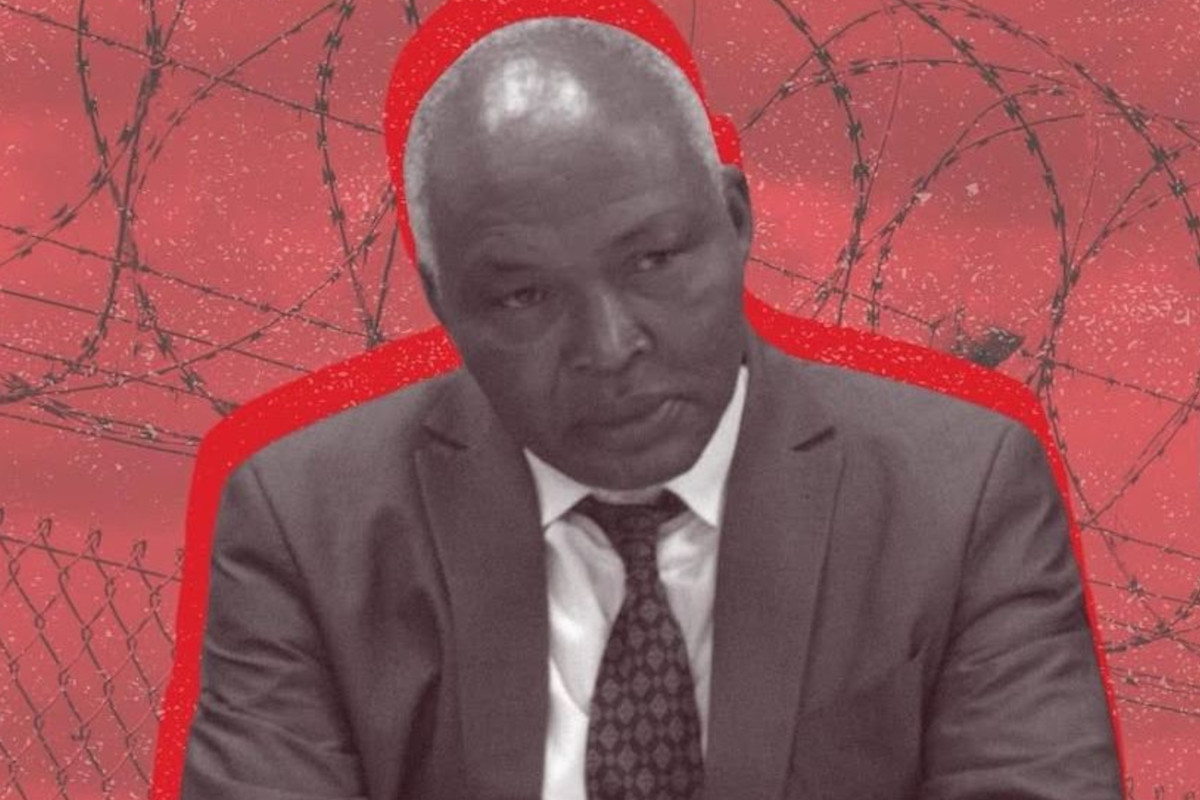
Two human rights activists, Panayote Dimitras and Tommy Olsen, face up to 20 years in prison for their work reporting on distress cases and arrivals of migrants and refugees to Greece. The activists are due to stand trial on the Greek island of Rhodes on 6 October 2026.
The Greek authorities accuse Dimitras and Olsen, alongside two Cameroonian asylum seekers, of “forming or joining a criminal organisation,” and facilitating “unlawful entry” and “unlawful stay” of foreign nationals in Greece. The charges centre around the arrival of the two asylum seekers on the island of Kos in July 2021, which was documented by Dimitras and Olsen via non-governmental monitoring organisations.
The trial has attracted high-profile criticism, with Human Rights Watch describing the ongoing prosecution as “a politically-motivated attempt to silence [the defendants’] efforts to expose abuses against migrants.”
Amnesty International said the charges are “a gross misuse of anti-smuggling legislation and are not backed by evidence,” adding that Dimitras and Olsen are “being targeted for their work documenting serious human rights violations against migrants and refugees.”
Former UN special rapporteur on the situation of human rights defenders, Mary Lawlor, also said the criminal investigation into Dimitras and Olsen “strongly appears” to be arbitrary.
Dimitras is a representative of the NGO Greek Helsinki Monitor, an organisation documenting violence by Greek border authorities and police, including illegal pushbacks of asylum seekers. Olsen, a Norwegian national, is founder of the NGO Aegean Boat Report, which monitors and documents violence by Greek authorities on the Aegean Sea crossing and on the Greek islands, as well as reporting cases of boats in distress.
The two Cameroonian asylum seekers were reportedly targeted after arriving by boat on the island of Kos in July 2021 – one for steering the boat, and the other for allegedly organising the transportation.
The charges come in the wake of numerous cases targeting solidarity with migrants in Greece. In January 2026, 24 humanitarians were acquitted of “bogus charges” by a court in Lesvos after a seven-year legal ordeal. Two of the activists, Séan Binder and Sara Mardini, spent over 100 days in pre-trial detention after being arrested in 2018.
Cases like these have what is called a “chilling effect” on humanitarian work. They make it even more difficult for organisations to operate and, in turn, reduce their capacity. In Greece, this has inevitably caused search and rescue organisations to shut down. Meanwhile, deaths and disappearances continue on the deadly Aegean crossing.
‘They didn’t like what I was doing’
Olsen told Statewatch:
“It goes back to 2020 when we started documenting pushbacks and publishing about it in national newspapers… I guess they didn’t like what I was doing. I think they tried to scare me off.”
Olsen said that at one point, the Greek authorities had opened “five different investigations” into him. “It was published in Greek press as if I was already convicted,” he said.
Olsen founded Aegean Boat Report after volunteering on Lesvos in 2015, and was increasingly documenting incidents of violent pushbacks – illegal expulsions from Greece to Turkey – after 2019.
In the following years, Olsen said received multiple reports of “masked men in balaclavas driving round the islands” and “people handcuffed in the woods.” In one case reported by Aegean Boat Report in December 2022, a group of around 26 people were threatened by armed masked men in a forest in Lesvos. The group, including men and women, were strip-searched at gunpoint before being handcuffed. They were then reportedly taken out to sea on a boat identified by Aegean Boat Report as belonging to the Greek coastguard. The group were later found drifting on a life raft by the Turkish coastguard.
In 2024, a BBC investigation found witness reports of the Greek coastguard causing over 40 deaths, due to being forced out of Greek territorial waters, or taken back out to sea after reaching the islands. Nine of those deaths were reportedly caused by coastguard officers “deliberately” throwing people into the water.
In January 2025, the European Court of Human Rights found Greece guilty of “systematic pushbacks” of people trying to claim asylum. Despite this ruling, and years of evidence including reports by a senior official within the EU border agency Frontex, Greece continues to deny involvement in pushbacks.
The EU Commission has also not acknowledged Greece’s role in the violations. In April, a spokesperson told the EUObserver, “it is the responsibility of member states to investigate any allegations.”
Onerous pre-trial conditions
On 11 March 2026, Olsen was arrested by Norwegian authorities under an arrest warrant issued by Greece. On 15 May 2026, the Halogaland Court of Appeal refused to surrender Olsen to the Greek authorities.
Olsen remains in Norway, where he said he is “pretty much stuck,” due to the existing arrest warrant. He will appear at the hearing in Rhodes in absentia, due to the risk of being held in pre-trail detention for up to 18 months, described as “likely” by Amnesty International. “It has a big impact on my life and work,” said Olsen. “The impact on my family has been the worst.”
Dimitras is not in detention, but is subject to a travel ban, a ban on carrying out any Greek Helsinki monitor activities related to migration, a duty to regularly report to a police station, and a bail payment of €10,000.
According to Zacharias Kesses, Olsen’s lawyer, the two accused Cameroonians left Greece after arriving in 2021, but their current location is unknown. Both have been issued arrest warrants.
A ‘chilling effect’ beyond Greece
Olsen said he believes less people are doing this kind of humanitarian work, because it has become “too dangerous” to carry out. “The chilling effect has increased year on year in Greece. It is very efficient,” he said.
Kesses told Statewatch cases such as these “can shift scrutiny away from state practices and those responsible.” He added that, whatever the authorities’ specific motives are, “proceedings of this kind can also serve a political function: discouraging those who document or challenge those practices.”
Kesses further attested to the ‘chilling effect’ on aid and evidence-gathering: “as organisations withdraw or reduce their presence, independent monitoring becomes weaker, leaving more room for unlawful practices, including pushbacks and illegal relocations, to continue without scrutiny.”
He added that lengthy and delayed proceedings can “impose a punishment” long before any final judgment. “In this way, legal pressure can lead to the de facto silencing or inactivity of humanitarian actors,” said Kesses.
Chiara Catelli, Advocacy Officer at the Platform for International Cooperation on Undocumented Migrants (PICUM), said Olsen and Dimitras’ case is not an exception. “The Greek state has been criminalising volunteers, lifeguards, journalists and others who helped migrants for years,” she told Statewatch.
Catelli described this as a Europe-wide issue:
“Across Europe, people are facing investigations, arrests, trials and even prison for acts of solidarity, from Italy to Latvia, from France to Poland. In all these cases, criminalisation of solidarity is the logical extension of policies that punish migration and migrants in the first place. Without systemic change in our migration policies, these trials will continue.”
Refugees disproportionately targeted
At least 110 people faced judicial proceedings for helping migrants in EU countries in 2025, according to data by PICUM. Forty-nine of those cases were in Greece. Asylum seekers are among those targeted in human smuggling cases across Italy, Spain, Greece and the UK – and by far the majority when it comes to serving sentences.
Migrants who take the helm of boats under duress, or hand out water on board, face particularly lengthy sentences – including life in prison or even sentences of hundreds of years for cases involving a shipwreck or fatalities.
Over 2,000 migrants are reportedly held in prison under smuggling charges in Greece. ‘Alleged smugglers’ constitute the second largest group of prisoners in the country according to data by Solomon, a Greek non-profit journalism organisation. Across 48 trials from 2014 to 2019, the average prison sentence was 48 years. Yet the average trial lasted just 38 minutes, with some taking just 15 minutes.
Despite the high numbers of migrants serving prison sentences, cases of European humanitarians tend to receive far more media attention. Reliable reports about accused refugees and migrants can therefore be hard to come by.
Criminalisation trends are predicted to “worsen” as a result of revisions to current EU legislation on migrant smuggling under the EU Facilitation Directive. The Directive does not include a clear and binding exception from criminalisation for humanitarian assistance by NGOs, family members or migrants. This is despite extensive reports by civil society campaigners, showing that counter-smuggling legislation often harms, rather than protects, migrants’ safety and rights.