

“The only thing worse than being blind is having sight but no vision.”
– Helen Keller
Available as a PDF here, also available in:
Editorial
Since 1 July, the Hungarian authorities have held the Council Presidency role. While this is, to some degree, a symbolic position, the member state with the Presidency also has a six-month window in which they can promote their policy preferences.
The Hungarian authorities, despite their avowed dislike of “Brussels”, are clearly more than happy to use its structures to advance ever-stricter migration control measures. This comes through loud and clear in documents published with this bulletin, with Presidency papers calling for new action to increase deportations, deeper migration control partnerships with non-EU states, stricter visa sanctions, and a host of other initiatives.
Of course, in many respects, this simply adds a Hungarian touch to long-standing EU policy priorities. The Orbán regime is also no doubt emboldened by the far-right’s disturbing electoral victories across the EU. Harsh new domestic measures against migration being proposed by member state governments of supposedly different political hues. No matter who is in power, it’s likely they are going to be scapegoating migrants.
The negative effects of these policies do not go unrecognised. The EU is not a monolith. Its own institutions are aware that continued support for and cooperation with Tunisia on migration policy “will entail striking an increasingly difficult balance between the EU’s credibility in terms of values and its interest in staying constructively engaged.” Yet the same report concluded that cooperation needed to be deepened. “European values” are increasingly being outweighed in that supposed balancing act.
This edition’s analyses provide unfortunate support for that contention. A Hungarian Presidency paper on the Central Mediterranean makes no mention of the political repression and violent abuses suffered by citizens and migrants in Tunisia, Egypt and Libya. A paper by the preceding Belgian Presidency on the situation in Sudan is, in our correspondents’ view, either blind to or deliberately ignorant of the ways in which the EU’s chief political priority – the containment of refugees – overrides options for meaningfully contributing to a peaceful resolution of the disastrous conflict in the country.
This is not to say that the EU has not provided humanitarian support to the region: money, and lots of it, has gone to Chad, South Sudan and other countries in the region who are hosting the vast majority of those forced to flee Sudan. But it is also the case that EU aid and development funding is increasingly propping up its migration control agenda, alongside existing border and migration funds.
Through the Coordination Group on Migration, a secretive body set up in late 2021, the EU and the member states attempt to coordinate their external migration spending. However, there is practically no public information available on the group, aside from a few scattered references to it in obscure documents.
We have so far obtained the agendas from all the meetings of the group, which are published with this bulletin. These do not reveal much, though they do show how hard ‘hard’ and ‘soft’ measures sit alongside one another in the EU’s policy palette.
In June 2023, the group discussed a project to support the Egyptian coast guard and border guard with surveillance and search and rescue equipment. A month later, “Supporting Chad, South Sudan and Ethiopia to addressing the Sudanese displacement situation” was on the agenda. Pending requests for documents that we have filed should shed more light on these, and other, projects.
Next year it is likely that proposals for the next round of EU budgets will be published. There will be substantial pressure for bigger funds for migration and border control, at the EU’s borders and beyond. It will be urgent to stop even more public funding being poured into harmful and counter-productive policies and projects.
A better understanding of those policies, projects and the bodies through which they are advanced, can play a key role in the struggle for more just and humane migration and asylum policies. As always, we hope this bulletin can contribute to that understanding. Knowledge does not automatically equate to power, but it is indispensable for it.
Thematic and regional developments
Contents
- Border management
- Budgets and funding
- Conditionality
- Deportation and readmission
- Migration partnerships
- Other
Border management
- Key points:
- Calls for “particular attention to strengthening our external borders” through “state-of-the-art solutions in the field of integrated border management”
- The Hungarian Presidency wants to share information and knowledge on new technologies with member states, Frontex and other actors
- One concrete proposal is for the Presidency to prepare a “compendium” of different “solutions” used in member states
- Author: Incoming Hungarian Presidency of the Council of the EU
- To: Working Party on Frontiers/Mixed Committee (EU-Iceland/Liechtenstein/Norway/Switzerland)
- Document date: 27 June 2024
- Document number: Council document 11335/24
- Classification: LIMITE
Frontex Vulnerability Assessment – Biannual Report 1/2024 ‒ Discussion paper
- Key points:
- Since the 2019 Frontex Regulation came into force, the agency has to conduct “vulnerability assessments” of member states’ external borders
- This document seeks to start a discussion amongst delegations on Frontex’s most recent report, which is classified as RESTRICTED and is not yet publicly available
- Author: Incoming Hungarian Presidency of the Council of the EU
- To: Working Party on Frontiers/Mixed Committee (EU-Iceland/Liechtenstein/Norway/Switzerland)
- Document date: 27 June 2024
- Document number: Council document 11338/24
- Classification: LIMITE
Work Programme of the Hungarian Presidency (Working Party on Frontiers)
- Key points:
- Focuses on “Strong European borders, a crisis-resistant system”, one of the three home affairs priorities of the Hungarian Council Presidency
- Under that heading, priorities include “Innovation & State-of-the-art”, large-scale IT systems and digitalisation, and “Frontex products”
- One page of the presentation is deleted
- Author: Hungarian Presidency of the Council of the EU
- To: Working Party on Frontiers
- Document date: 12 July 2024
- Document number: WK 10075/2024 INIT
- Classification: LIMITE
Budgets and funding
Agendas of the Coordination Group on Migration under the NDICI-GE and EU MSs bilateral funds
21 agendas of meetings from December 2021 to April 2024:
- 3 December 2021
- 18 February 2022
- 1 April 2022
- 17 June 2022
- 19 October 2022
- 16 November 2022
- 24 November 2022
- 25 January 2023
- 30 March 2023
- 4 May 2023
- 2 June 2023
- 4 July 2023
- 27 July 2023
- 18 December 2023
- 6 February 2024
- 11 March 2024
- 12 April 2024
- 22 May 2024
- 12 June 2024
- Chargui region – support to conflict prevention and social cohesion (Ares(2024)5425698)
- A €2 project funded by the NDICI – Global Europe Rapid Response Pillar
- “This 18-month exceptional assistance measure seeks to prevent and manage conflict by strengthening social cohesion between host communities, refugees, and returnees. In line with the EU’s integrated approach to external conflicts and crises, the action will improve the economic and environmental resilience of host populations and refugees out-of-camp in the Hodh El Chargui region and more specifically, will support the consolidation of conflict prevention, resolution and management mechanisms related to the governance of natural resources, in particular through participatory community plannings and their implementation to improve access of populations to basic social services”
- 9 July 2024
- 29 July 2024
- Chargui region – support to conflict prevention and social cohesion (Ares(2024)5425698)
Conditionality
Towards a second-generation of Visa Facilitation Agreement? Overview and way forward
- Key points:
- Only five of 13 existing Visa Facilitation Agreements are fully applicable
- The Presidency proposes moving towards a new “generation” of VFAs
- Includes proposals for new restrictions, for example to make it possible to suspend a VFA for reasons of national security, or to condition VFAs on third country alignment with EU foreign policy
- Author: Belgian Presidency of the Council of the EU
- To: Visa Working Party
- Document date: 15 May 2024
- Document number: Council doc. 9887/24
- Classification: LIMITE
- Key points:
- Proposal that would introduce restrictions and limitations on the issuance of Schengen visas to Somali nationals
- The proposal is a response to Somalia’s “insufficient” cooperation with EU deportations
- The proposal makes clear that there are already severe limitations on Somali nationals applying for or obtaining Schengen visas – for example, “six Member States do not recognise any travel document issued by Somalia, and a further seven only recognise diplomatic or service passports”
- Author: European Commission
- To: Visa Working Party
- Document date: 23 July 2024
- Document number
- Commission document COM(2024) 324 final/2
- Council document 12536/1/24 REV 1
- Classification: None
Deportation and readmission
Towards a more assertive return policy
- Key points:
- Says that the “exceptional” situation requires “exceptional responses with the necessary basis in law, while also considering innovative, “out of the box” solutions to address mixed migration flows”
- In order to increase deportations, “the policy toolbox needs to be extended,” by using trade policy, “more strategic use of EU external funding,” and links between migration and other EU external policies
- Notes that third countries can provide “mediation” to support deportations of people with criminal convictions to countries such as Syria and Afghanistan, while suggesting that third countries may also serve as “return hubs” for the EU
- Author: Hungarian Presidency of the Council of the EU
- To: Permanent Representatives Committee
- Document date: 9 September 2024
- Document number: Council document 13129/24
- Classification: LIMITE
- Key points:
- Recounts a number of initiatives launched or possibilities to discussed to increase deportations
- Key focus is “challenges linked to public safety and national security posed by persons who cannot be returned,” preparing for a discussion at the SCIFA meeting on 27 September
- Delegations are asked whether they could envisage EU action on deportation of individuals posing security threats “who come from sensitive third countries,” and how EU agencies could be involved
- Author: Hungarian Presidency of the Council of the EU
- To: Strategic Committee on Immigration, Frontiers and Asylum
- Document date: 13 September 2024
- Document number: Council document 13170/24
- Classification: LIMITE
EU Visa Policy – evaluation of the Visa Code
- Key points:
- European Commission evaluation of the EU Visa Code
- A reformed version of the Code came into force in February 2020
- One issue examined in the report is cooperation on readmission
- Author: European Commission
- To: Secretary-General of the Council of the EU
- Document date: 19 April 2024
- Document number:
- Classification: none
Presidency discussion paper on steps towards a well-functioning return system
- Key points:
- Notes that negotiations on a new version of the Return Directive have “stalled” and the number of deportations from the EU “remain significantly below the expected level”
- The paper aims to build upon discussions in the first half of 2024 “to explore possible directions from a more operational perspective”
- The document focuses on how “return of persons posing a security risk” can be ensured and accelerated
- Author: Hungarian Presidency of the Council of the EU
- To: Working Party on Integration, Migration and Expulsion (IMEX Expulsion)
- Document date: 18 July 2024
- Document number: Council document 12149/24
- Classification: LIMITE
Assessment of third countries’ level of cooperation on readmission in 2023
- Key points:
- Annual report used to determine whether countries should be subjected to visa sanctions for lack of cooperation with deportations from the EU
- Includes assessments of more than 30 states
- As reported by Statewatch, the report calls for renewed efforts to speed up deportation and readmission procedures to meet timelines set out in new EU migration legislation
- Author: European Commission
- To: Secretary-General of the Council of the EU
- Document date: 23 July 2024
- Document number:
- Council document 11797/24
- Commission document COM(2024) 340 final
- Classification: RESTREINT/RESTRICTED
Information from the Presidency regarding a pilot project on mutual recognition of return decisions
- Key points:
- New legislation that came into force in 2023 makes it possible to put alerts on return decisions in the Schengen Information System, making them visible to all member states
- This practice, intended to ensure mutual recognition of return decision between member states, is “effective in general terms” but “still wanting in terms of timeliness and adequacy in some cases”
- The Hungarian Presidency is therefore launching a pilot project between 18 August and 18 November to change the situation, which is outlined in the document
- Author: Hungarian Presidency of the Council of the EU
- To: Working Party on Integration, Migration and Expulsion (IMEX Expulsion)
- Document date: 18 August 2024
- Document number: Council document WK 10475/24 INIT
- Classification: LIMITE
Migration partnerships
The current situation in Sudan and its impact on the region – Presidency paper
- Key points:
- Despite the enormous scale of the disaster caused by the conflict in Sudan, the number of Sudanese citizens arriving in the EU was “relatively” low between April 2023 and May 2024, at 8,162
- The document outlines the situation for displaced people, who number in the tens of millions, both within Sudan and in neighbouring countries such as Chad and Egypt
- The document makes no recommendations or proposals for EU action, but does say that the situation in Sudan “deserves more attention”
- Author: Hungarian Presidency of the Council of the EU
- To: Working Party on External Aspects of Asylum and Migration (EMWP)
- Document date: 11 July 2024
- Document number: Council document 11375/24
- Classification: LIMITE
The current migratory situation in Afghanistan – Presidency paper
- Key points:
- Discusses the situation in Afghanistan following the Taliban takeover in 2021, noting that “there are many signs” the country “is evolving into a theocratic police state”
- Brief overview of the economic and humanitarian situations before examining the “migration impact” and the EU response (including funding figures), and a relatively lengthy section on the activities of the International Committee of the Red Cross
- The first of two questions that ends the paper is concerned with “the situation on Afghan migrants, including on criminal cases,” indicating the chief concern is with Afghans in the EU
- Author: Hungarian Presidency of the Council of the EU
- To: Working Party on External Aspects of Asylum and Migration (EMWP)
- Document date: 16 September 2024
- Document number: Council document 12991/24
- Classification: LIMITE
Overview of the Central-Mediterranean Route – Presidency paper
- Key points:
- Egypt, Libya and Tunisia are countries “of outstanding importance” and “anti-smuggling and border protection efforts” by Libyan and Tunisian authorities have been important in limiting departures
- Following the EU-Egypt deal of March 2024, “the Egyptian side has not yet shown interest in concluding a joint statement on migration and mobility,” and appears uninterested in an agreement with Europol, but “technical work” continues
- The document also praises cooperation with Tunisia, but notes a lack of interest in signing an agreement with Europol
- Two EU missions have gone to Libya this year, where they have “discussed a comprehensive migration agenda,” and the document notes that cooperation could include work on “prevention of departures”
- Author: Hungarian Presidency of the Council of the EU
- To: Working Party on External Aspects of Asylum and Migration (EMWP)
- Document date: 15 July 2024
- Document number: Council document 11373/24
- Classification: LIMITE
Migratory situation on the Western Mediterranean and Atlantic routes – Presidency paper
- Key points:
- Acknowledge the role of the state in creating dangerous journeys: “…given the increased controls on the Strait of Gibraltar and the Mediterranean coastline, migrants often try to set off from difficult-to-reach rocky shores and have to choose hidden, inaccessible areas to dock, which increase the risk of accidents at sea.”
- However, the document primarily blames the danger for people making sea crossings on smugglers
- The document gives a brief overview of cooperation with Morocco, Algeria, Mauritania, including information on funding worth hundreds of millions of euros
- Author: Hungarian Presidency of the Council of the EU
- To: Working Party on External Aspects of Migration and Asylum (EMWP)
- Document date: 13 September 2024
- Document number: Council document 12988/24
- Classification: LIMITE
Update on the state of play of external cooperation in the field of migration policy
- Key points:
- A lengthy document which is regularly updated and circulated amongst delegations in the Council
- It includes listings of meetings and events related to bilateral dialogues between the EU and other states, as well as EU involvement with multilateral processes
- Useful for identifying meetings and events for which requests for access to documents can be filed
- Author: Commission Services
- To: Working Party on External Aspects of Asylum and Migration (EMWP)
- Document date: 15 July 2024
- Document number: Council document 11374/24
- Classification: LIMITE
Other
Temporary protection beneficiaries in the EU – Presidency discussion paper
- Key points:
- Notes the significant efforts that has gone into welcoming Ukraine refugees, who are beneficiaries of the Temporary Protection Directive
- The paper is primarily concerned with “future decisions on shaping the transition out of temporary protection”
- Discussion to be held at the SCIFA meeting on 27 September
- Author: Hungarian Presidency of the Council of the EU
- To: Strategic Committee on Immigration, Frontiers and Asylum
- Document date: 20 September 2024
- Document number: Council document 13171/24
- Classification: LIMITE
Overall state of the Schengen area – Schengen Barometer +
- Key points:
- A wide-ranging document
- Migrant smuggling is framed as a key threat to “internal security”
- Circulated prior to the Schengen Council meeting on 10 October
- Author: Services of the Commission
- To: Delegations
- Document date: 23 September 2024
- Document number: Council document 13507/24
- Classification: LIMITE
- Key points:
- Covered by Statewatch here
- Author: Hungarian Presidency of the Council of the EU
- To: Asylum Working Party
- Document date: 25 September 2024
- Document number: Council document 13517/24
- Classification: LIMITE
Review of the status of beneficiaries of international protection – Discussion paper
- Key points:
- Covered by Statewatch here
- Author: Hungarian Presidency of the Council of the EU
- To: Asylum Working Party
- Document date: 25 September 2024
- Document number: Council document 13518/24
- Classification: LIMITE
Annual report under the visa suspension mechanism: mid-term assessment and input for the next report
- Key points:
- The document comes in response to a Belgian Presidency proposal for a common approach to assessing the Commission’s annual report on the visa suspension mechanism
- Little substantive information in the document except as regards visas for Kosovan nationals
- Ends with questions for delegations intended to inform discussions in the Visa Working Party
- Author: Belgian Presidency of the Council of the EU
- To: Visa Working Party
- Document date: 15 May 2024
- Document number: Council document 9888/24
- Classification: LIMITE
Kickoff discussion on VIS statistics and asylum
- Key points:
- Paper gives an introductory overview for a discussion on “abuse of visas by nationals from visa-required countries”
- A lack of statistics means it is “currently impossible to asses the scale of this phenomenon”
- Discussion is meant to provide a first step on ways to address this
- See also the presentations below
- Author: Belgian Presidency of the Council of the EU
- To: Visa Working Party/Mixed Committee (EU-Iceland/Norway and Switzerland/Liechtenstein)
- Document date: 19 June 2024
- Document number: Council document 11228/24
- Classification: LIMITE
Kick-off discussion on VIS statistics and asylum (presentations)
- Key points:
- Contains presentations from Belgium, Sweden and the European Commission on the relationship between visas and asylum
- Belgian presentation: Understanding the relation between visa and asylum using VIS [Visa Information System] hits
- Swedish presentation: Use of the VIS in the asylum process
- European Commission presentation: VIS statistics and asylum
- Author: General Secretariat of the Council
- To: Visa Working Party
- Document date: 26 June 2024
- Document number: Council document WK 9149/2024 INIT
- Classification: LIMITE
Assessment of the Belgian Presidency
- Key points:
- Presentation giving an overview of work undertaken under the Belgian Presidency, covering legislative changes, strategic discussions, and “other”
- Author: Belgian Presidency of the Council of the EU
- To: Visa Working Party
- Document date: 24 June 2024
- Document number: Council document WK 9052/2024 INIT
- Classification: LIMITE
Priorities of the incoming Hungarian Presidency
- Key points:
- A presentation setting out the Hungarian Presidency’s priorities for justice and home affairs, one of which is “Enhancing common effort in the external dimension of migration”
- Also includes priorities for the Visa Working Party
- Author: Incoming Presidency
- To: Visa Working Party
- Document date: 24 June 2024
- Document number: Council document WK 9053/2024 INIT
- Classification: LIMITE
- Key points:
- A draft note from the EU to the UN
- Relates to a spat regarding an attempt by Belarus’ to submit a particular interpretation of international law
- Author: Hungarian Presidency of the Council of the EU
- To: Working Party on Integration, Migration and Expulsion (IMEX Expulsion); Working Party on Public International Law
- Document date: 24 July 2024
- Document number: WK 10337/2024 REV 1
- Classification: LIMITE
Towards a more strategic approach on EU visa policy – developing Council Conclusions
- Key points:
- Hungarian Presidency is seeking to develop a set of Council conclusions on EU visa policy
- The document runs through various aspects of visa policy and potential changes, including: revision of the visa suspension mechanism, possible application of European Travel Authorisation and Information System (ETIAS) “restrictive measures” in cases where there is “abuse” of the visa-free regime, the revamped Visa Information System and statistics on visas and asylum, and “visa sanctions” to encourage cooperation with deportations
- The document also details ways in which negotiations on visa agreements with third countries could be used to obtain cooperation on security and migration issues
- Author: Hungarian Presidency of the Council of the EU
- To: Visa Working Party/Mixed Committee (UE-Iceland/Norway and Switzerland/Liechtenstein)
- Document date: 6 September 2024
- Document number: Council document 12930/24
- Classification: LIMITE
Ignoring the root causes of disaster: the EU and Sudan

Image: Abdulaziz Mohammed, Unsplash
Document:
- The current situation in Sudan and its impact on the region – Presidency paper (pdf)
- Outsourcing borders document archive
The paper’s introductory section makes clear that the EU’s interest in the country is tied to its migration control agenda.
The Belgian Presidency (in post from January to June 2024) said it aimed to address the “root causes of migration and forced displacement,” seeking a “balanced cooperation with key countries of origin and transit and building partnerships.” This would require the “continuous monitoring of the migratory route,” to “analyze the potential impact of the crisis situations on the European Union and the tools we have at our disposal to improve our resilience.”
Sudanese have good reasons to flee. The ongoing war has, from the beginning, been meant to destroy the social fabric of the Sudanese Revolution, which started in December 2018 and was overthrown in the Coup of the Generals in October 2021.
There is no legitimate government with which peace negotiations could take place. There are two parties to the conflict: the Rapid Support Forces, which have previously been legitimized through EU partnership to act as border guards, under the leadership of Hemmeti (Mohamed Hamdan Dagalo). The RSF evolved from the Janjaweed, who were responsible for the genocide in Darfur in the early 2000s, and they act in a close coalition with the United Arab Emirates (UAE). The other party are the Sudanese Armed Forces (SAF) and their Islamist supporters, who hope to win the war, and power, for the next 20 years.
The UAE and RSF are taking part in the US-led peace negotiations and claim to be open to providing humanitarian aid to the people whom they themselves have driven out of Darfur, Khartoum, Gezira, Gedarif, and the Blue Nile, causing the world’s largest humanitarian and internal displacement crisis. The Norwegian and the Danish Refugee Councils speak of a starvation crisis of “historic proportions.” Sudan will no longer be the same after the war. Agro-industry and large herds of cattle will spread across the areas where people used to live. Gold mines will have been plundered, and cities will be reduced to places of poverty.
Ten million displaced people, two million who have fled to neighbouring countries – but the EU’s chief concern relates to the 8,000 Sudanese who have made it into the EU “illegally,” most of them on the deadly route across the Mediterranean. The document refers to “resilience.” It is “European” resilience, not that of the people fleeing. In the interplay between coastguards and militias, the EU’s asylum system and Frontex, what is meant by resilience other than “keep them out”?
What the document correctly describes
Section 2 of this document correctly describes the situation in Sudan: the catastrophe, the warring parties, the failed peace negotiations and humanitarian conferences. There is also not much to criticize in the third section, which refers to the effects of the refugee movements on the neighbouring countries. The list of figures is correct, as well as the description of the difficult situation in the refugee camps in Chad, the situation of the refugees who have been illegalized in Egypt, and the push-backs from there back into the war zone. Indeed, it is impossible to hide the extent of the current disaster in Sudan.
One month after the document was published, Switzerland initiated negotiations under US sponsorship. They failed because the US and EU want to reproduce the same structure of an extractive and dependent economy by bringing neoliberal factions to the seat of power. This neglects the voice of the majority of the Sudanese people represented in the widely spread grassroots organization of the Resistance Committees and their political vision to end the war.
There is, however, much that the paper does not say.
What the paper conceals
“Further funding has been contracted with international implementing partners (following the no policy engagement with state authorities, meaning that no funding is being provided to the de facto authorities).”
As to the international partners, the UAE is sailing under the flag of the Red Crescent, delivering aid and weapons with the very same cargo planes. Other vital actors offering humanitarian relief in Sudan are not mentioned in the document or supported by the EU. Prime among these are the numerous Resistance Committees, which are still active in many regions.
These committees were civil society’s most important achievement in the revolution, but they are being worn down by all international actors involved, and the population is being reduced to a humanitarian problem to be managed. The EU paper describes the destruction of “the social fabric to a catastrophic degree.” The achievements of the revolution, that could have helped to repair that social fabric, are being undermined – if not wiped out altogether – through the arrangement reached by the EU and other actors with the UAE in the Geneva peace talks.
“The changing geo-political context makes Sudan even more important for the EU’s geo-strategic interests”
“Geostrategic interests” – this shoe is one size too big for the EU. East Africa has become the plaything of the interests of the Emirates and, to a lesser extent, the interests of Saudi Arabia, Egypt, Ethiopia and Turkey. Europe is aligning itself with the interests of the Gulf states, especially the Emirates, which the USA has just declared to be their most important regional ally. The old west needs petrodollars and energy partnerships on a scale far beyond that which East Africa could provide.
The Emirates, however, are following their own strategy, which, in addition to dealing specifically with migrant labour, is about logistics, investment and influence through their “Belt of Bribes” (designed to foster closer connections with Djibouti, Somalia, Ethiopia, Kenya, Egypt and Chad). Since the Arab Revolution, the country has also consistently pushed a counter-revolutionary agenda directed against democratic movements and in favour of Islamist policies. For better or worse, the EU is letting the Emirates have their way. These geopolitical constellations are one of the root causes of many problems in the region, especially regarding the expulsion of populations and overcrowded refugee camps in Chad, Kenya, and elsewhere.
Refugee containment above all else
However, the most important root cause of the EU’s problems in East Africa, West Asia, and North Africa (WANA) is that efforts at containing refugees override all other political priorities. This has led to the EU supporting the RSF militia for years, thus contributing to its international reputation. For this reason alone, the EU is partly to blame for the rise of the RSF as an international actor.
Much more important in our eyes, however, is the very high price of refugee containment in North Africa, in which the EU is involved with both overt and covert means. The EU paper mentions some 8,000 refugees from Sudan who have made their way across the central Mediterranean route, but it does not mention the tens of thousands who are stranded in Libya and Tunisia and who are currently eking out a living in informal camps in olive groves, or who are being deported to the desert, after their boats were intercepted by the Tunisian coastguard.
Alternative approaches for the EU to support Sudan
This is not the place to discuss the political preferences of the European electorate. These are deeply at odds with global developments and are causing a deep crisis in Western democracies. It would have been the responsibility of the political class to seek a balance between European electorates and the interests of the populations in the Global South. Instead, they are following right-wing narratives, thus digging their own graves.
In relation to Sudan, this political responsibility could have found its starting point in three areas:
There are ways to support the Resistance Committees (RCs) in Sudan and to include them in the scenario of peace solutions. This keeps at least parts of the Sudanese social fabric alive and, at the same time, creates mechanisms to distribute humanitarian aid inside the country, where it is needed no less than in the refugee camps. Investing in the RCs is the only way to stop refugees from being forced to cross the borders and to save the last resources of democracy for Sudan.
It would be possible for the EU to keep a critical distance from the new regional imperialism as practised by the Emirates, which involves promoting a form of capitalism that uses people only as a mobile workforce and otherwise sees them as best located in refugee camps.
Welcoming Sudanese refugees in the EU as Ukrainians have been. These people would earn money and support their relatives as best they could. This would raise far more in remittances than the EU could ever mobilize.
The EU’s funding for humanitarian issues is considerable indeed. In a similar vein, the Emirates also provides a lot of money. But this is money with an aftertaste: the Emirates wants to dispose of the people who disturb their investments, while the EU seeks to ward off refugees. In a way, this is an alliance of villains.
Conclusion
To sum up, the document highlights the EU’s blindness – or willing silence – towards two critical issues:
The role of the UAE in fueling the Sudan war that even the Security Council couldn’t ignore in its report in April 2024
The UAE has played a notably destabilizing role in the ongoing Sudanese conflict, intensifying a war that has already devastated the region and strained international humanitarian resources. By supplying the Rapid Support Forces (RSF) with substantial military aid and financial backing, the UAE has empowered one of the most aggressive actors in the Sudanese conflict.
This external support has contributed to the escalation and prolongation of hostilities, making it harder for either side to pursue peace or for international mediators to negotiate a ceasefire. This intervention has not only fueled violence but has also destabilized neighbouring regions, further stretching humanitarian aid and triggering widespread displacement, with millions fleeing conflict zones.
Despite international condemnation, the UAE’s ongoing interference in Sudan reflects broader geopolitical ambitions that disregard the severe humanitarian fallout, making it a critical factor in Sudan’s worsening crisis.
The EU’s disregard for Sudan’s Resistance Committees (RCs) has critically weakened peacebuilding efforts and local resilience in Sudan
These grassroots organizations, rooted in Sudan’s communities and central to civil resistance, represent a strong voice for democratic governance and social justice. By sidelining the RCs, the international community has failed to harness one of Sudan’s most organized and impactful forces for peace.
This exclusion alienates local actors who hold invaluable knowledge of the conflict’s socio-political fabric and are instrumental in mobilizing community support for nonviolent resistance and democratic transition.
Without engaging these groups, peace initiatives risk being perceived as disconnected from the will of the Sudanese people, reducing their legitimacy and effectiveness. Recognizing and involving the RCs is essential to ensure that peacebuilding efforts are sustainable and grounded in local support, which is critical for any lasting solution to Sudan’s crisis.
Horn of Africa Media Office, c/o migration-control.info
EU support for violent and authoritarian regimes: no end in sight
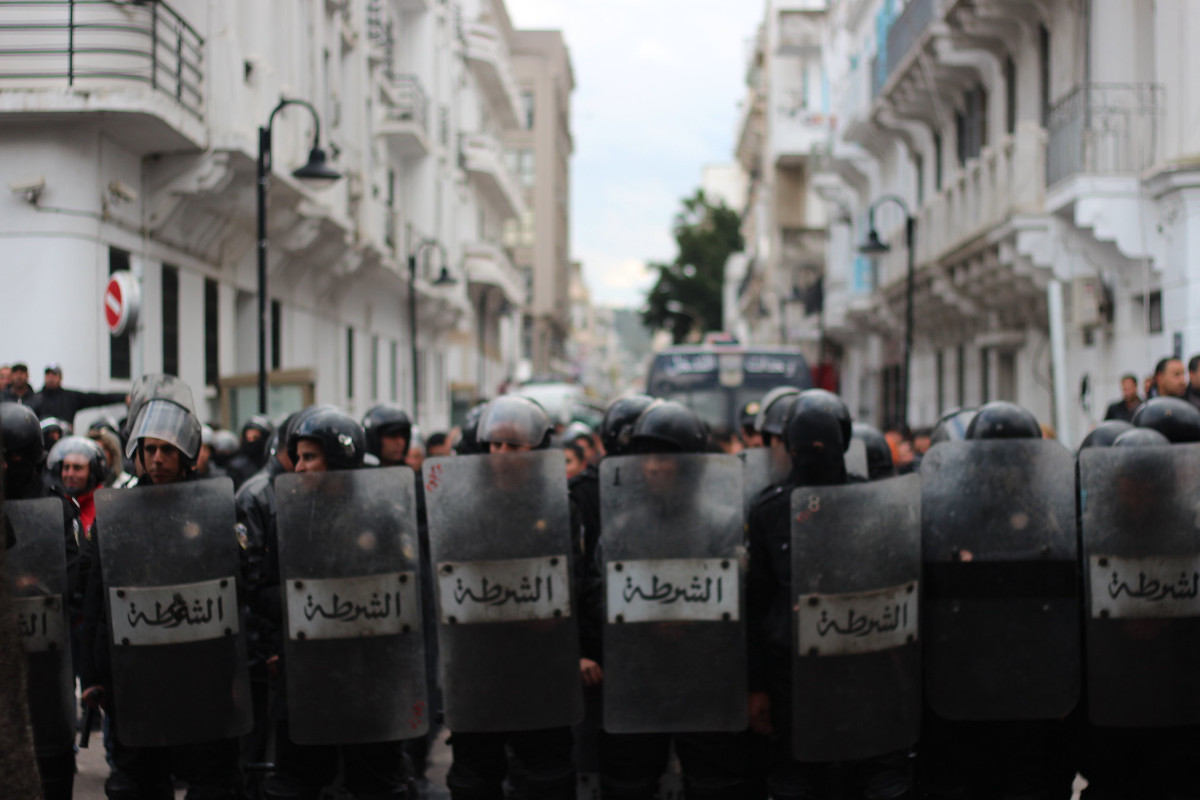
Image: Amine Ghrabi, CC BY-NC 2.0
Data: a three-year increase in central Mediterranean border crossings
Document:
- Overview of the Central-Mediterranean Route – Presidency paper (pdf)
- Outsourcing borders document archive
In 2023, central Mediterranean irregular border crossings increased for the third consecutive year. The following number of people were registered as making the crossing:
- 2021: 67,724
- 2022: 105,561
- 2023: 158,020
The main nationalities registered were Bangladeshi, Egyptian, Guinean, Tunisian and Ivorian. There are also a growing number of Burkinabe, Malian and Sudanese people. There were decreases in arrivals of North African nationals in 2023:
- -57.2% of Algerians
- -45.1% of Egyptians
- -1.8% of Tunisians
Libya has become the main country of departure, with 56% of the total, taking over from Tunisia. An increase in arrivals from March 2024 followed the decrease in the third quarter of 2023. Seasonal differences, also dependent on weather patterns, are not uncommon. However, the rate of increase was lower than the previous year, the document notes.
Primary factors behind recent changes
The Hungarian Presidency links these changes to a few primary factors. First is the EU’s “comprehensive partnerships” with Egypt and Tunisia, covering policy areas in migration and mobility. It also attributes them to the “anti-smuggling and border protection efforts of the Libyan and Tunisian authorities.”
The paper also relates the intensification of measures against irregular migration in these countries to endogenous factors. Examples include a “tense economic situation” and “negative public perceptions on migration”. Promoting deportations from north African countries is “expected to remain a priority.”
The EU’s support for these factors is also set to remain a priority despite the appalling consequences for human rights. This includes ongoing efforts to increase police cooperation with North African states. The document notes an EU policing action plan that calls for the detection and disruption of organised crime groups involved in smuggling, by creating dedicated “investigative/operational” task forces.
The action plan also features efforts to:
- improve real-time information and intelligence exchanges with Europol and Eurojust; and
- improve investigations in “source, transit and destination countries” along the Central Mediterranean.
On investigations, the Presidency’s document says a Europol Mediterranean Operational Task Force (OTF), set up as part of the ten-point plan for Lampedusa agreed in 2023, is “leading to fruitful results”. It is considered a means to “enhance operational cooperation” with member states and beyond.
Egypt’s reluctance toward agreements and cooperation with Europol
Despite these warm words, it seems that not all the EU’s partners in North Africa are so keen on intensified police cooperation. The document notes that Egypt is reluctant both to agree to a statement on migration and mobility and to increase its cooperation with Europol.
The document describes Egypt as having a “large migrant stock,” but without significant departures since 2017. However, it is a transit country for people wanting to reach departure points, primarily in Libya. The paper says “statistics with numbers from 2022” place Egyptian nationals amongst the top ten non-EU nationalities suspected of involvement in human trafficking. It is not clear whose statistics are cited.
The emergence of “hybrid smuggling packages” is also noted. These comprise legal, semi-legal and irregular travel through Egypt to other departure points. Additionally, a Strategic and Comprehensive Partnership was launched in March 2024 and backed by €7.4 billion in funding from 2024 to 2027. It covers six pillars:
- political relations;
- economic stability;
- trade and investment;
- migration and mobility;
- security and demography; and
- human capital.
Since then, the Commission has proposed a joint statement on migration and mobility to cover border management, counter-smuggling, counter-trafficking, returns (of Egyptian nationals from the EU, and voluntary returns from Egypt to countries of origin) and reintegration, legal migration, labour mobility, and asylum.
Despite these measures, the Hungarian Presidency’s note says “the Egyptian side has not yet shown interest in concluding a joint statement on migration and mobility”. Similarly, it “has not shown much interest” in negotiating a deal for “the exchange of personal data with Europol.”
It is perhaps because of this reluctance that EU Commissioner for Migration and Home Affairs, Ylva Johansson, travelled to Cairo in early September to try to persuade Egyptian ministers. The Hungarian foreign minister was there the following week, setting rather a different tone to Johansson. He said, “Brussels represents danger, while Cairo is Europe’s protector when it comes to migration.”
Discussions will also have taken place in other fora: a High-Level Migration Dialogue with Egypt involving the European External Action Service and two Commission Directorate-Generals was scheduled for 16 July 2024.
Tunisia: tackling increase in departures, disregarding authoritarian crackdown
People arriving from Tunisia reached record levels in Italy in 2022 (32,371 people). This followed an authoritarian turn under President Kais Saied. The trend continued in 2023, when people arriving rose three-fold to 99,000. These numbers, amongst other things, led to the EU pushing for a “strategic and global partnership” with Tunisia, agreed in July 2023.
The agreement builds on the EU-Tunisia Association Agreement and has five “pillars”:
- macroeconomic stability;
- trade and economy;
- green energy transition;
- people to people contacts; and
- migration and mobility.
The Hungarian Presidency paper notes that the migration pillar “is of high priority”. At the same time, information exchange and transparency “remain key”. Yet, like Egypt, Tunisia has not shown interest in concluding an information exchange agreement with Europol, despite ongoing negotiations based on a Council authorisation dating back to 2018.
Regardless, EU funds are flowing into the country.
€53 million in funding for migration-related projects was contracted in 2024, of a €105 million commitment from the EU’s aid and development budget, the Neighbourhood, Cooperation and International Development Instrument (NDICI). This comes on top of “around EUR 200 million of ongoing programmes.”
To back this up, the Presidency highlights the second “Talent Partnership” round table held in Tunis in June 2024, as an example of a success, potentially leading to agreement on a joint roadmap and a third round table in 2025. “Talent Partnerships” are intended to facilitate labour migration to the EU.
Alongside supporting Tunisian authorities in intercepting attempted sea crossings, EU funding has enabled more “voluntary returns” of people from Tunisia to countries of origin. This resulted in 3,300 people “voluntarily” returned between January and May 2024. This is a substantial increase compared to the 2,500 undertaken in 2023.
Meanwhile, the situation in the country has got worse. The provision of basic services by UNHCR has been hampered by a “deterioration of the situation for migrants in Tunisia,” the paper says. This is a rare acknowledgement of harmful developments in the North African country. Yet, there is no mention of responsibility for this deterioration. Likewise, there is no link made with EU migration policy externalisation despite the many calls made by civil society.
Libya in a disjointed context
The Presidency notes that Libya’s political situation makes it difficult to achieve peace and stability. It relates this to the presence of two executive authorities: the Tripoli-based Government of National Unity and the Government of National Stability in the east. It neglects to mention that the country’s “coast guards” are similarly fragmented.
Despite this, bilateral engagement between the EU and the Tripoli authorities increased after the Commission’s November 2023 conference launching a “Global Alliance to Counter Migrant Smuggling.” The Presidency’s note says many areas may see enhanced cooperation, including:
- border management;
- search and rescue operations;
- prevention of departures;
- effective migration governance;
- increasing “voluntary humanitarian returns”;
- improving international protection; and
- human rights and cooperation in the field of labour migration.
Member states, the Commission and the European External Action Service (EEAS) have proposed caution, graduality and effective implementation monitoring as a basis for cooperation with Libya. Yet, it seems that exchanges have been intense.
In February, the Commission’s Directorates-General for Migration and Home Affairs (DG HOME), Neighbourhood and Enlargement Negotiations (DG NEAR) and the European External Action Service travelled to Tripoli to exchange views with Libyan authorities. The Libyan side indicated an interest in improving cooperation in the country’s south and east. They conveyed “a particular emphasis on strengthening reception centres and increasing voluntary returns.”
In May, a Libyan delegation visited Brussels. Here, they confirmed openness to cooperation on “the fight against illegal migration, strengthening search and rescue operations and increasing access to reception centres for international organisations and support for refugees.” The EU side spoke of alternative solutions to detention and simplifying procedures to increase “voluntary” returns.
From 29 June to 2 July, an EU delegation travelled to both Tripoli and Benghazi. In Tripoli, they discussed a comprehensive migration agenda. Relations were dynamic and “positive”. In Benghazi, the meeting was between competent authorities and strictly technical .
Hidden in plain sight: what is left unsaid
First, the Presidency paper heavily emphasises law enforcement and control measures, without considering their effects. It ignores the possibility that the EU migration policy model and authoritarian regimes’ persecution of their citizens may be the root of existing “challenges”.
Yet, while ignoring this obvious possibility, it claims:
“In the coming months, it may become clearer whether the cooperation efforts undertaken so far can address the root causes of illegal migration and not just the consequences.”
Second, there is little acknowledgement of the EU partnering with dangerous groups. While it makes a passing reference to Libyan militias as “armed groups”, it ignores others. This includes institutions infilitrated by, or intertwined with, militias. This collusion became more obvious after the killing of Abd al-Rahaman al-Milad (also known as Bija). A commander of the Libyan coastguard in Zawiya, Bija was also accused of membership of criminal groups linked to trafficking. He was killed in a gangland-style shooting on 1 September in Tripoli. The EU’s support for such organisations and individuals may serve to increase their profits. This is due to repeated crossing attempts by the same people stuck in a cycle of interception at sea and detention in Libya.
Ongoing court cases are also trying to highlight the illegality of EU and member state action. In September 2024, the sea rescue organisation Mediterranea filed a case before the International Criminal Court (ICC) against Italian interior minister Matteo Piantedosi. Piantedosi had boasted about 16,220 people being intercepted and returned to Libya in 2024. In early October, Refugees in Libya and Front-Lex filed a case against Frontex. They are demanding Frontex stop communicating the location of boats in distress to Libyan authorities. Despite this, cooperation between Frontex and the Libyan coast guard continues unabated.
Third, it is contradictory that the section on Tunisia says that all activities funded by the EU “should be anchored within the respect of human rights and human dignity of all migrants, refugees and asylum seekers, in accordance with International Law.”
Tunisian authorities have launched a wave of repression against political dissent, civil society, the media and lawyers, alongside racist statements and outright violence against the country’s Black population, people on the move and people acting in solidarity with them. Human rights abuses, particularly those endured by people travelling through Tunisia, worsened after the signing of the “strategic and global partnership.”
Moreover, the Tunisian coastguard endangers lives through “illegal and violent practices,” says the organisation AlarmPhone. The group argues that “strengthening the interception capacities of the Tunisian National Guard” is designed “to set up a regime of non-assistance at sea and ‘push back by proxy’.”
Civil society organisations on both sides of the Mediterranean, have condemned the EU’s support for Tunisia and called for it to end. It remains to be seen what effect – if any – President Saied’s 90% vote tally in recent elections will have on the EU’s support.
Fourth, cooperation with Egypt is troubling for several reasons, not least the al-Sisi regime’s targeting of political opponents. There have also been large-scale pushbacks of refugees to Sudan, despite the raging armed conflict.
Finally, any agreement allowing personal data exchange between Tunisia, Egypt and Europol is likely to involve unreliable or persecutory information. Fed to the EU’s policing agency, these would form part of the data sources used for screening or asylum adjudication procedures. This could jeopardise people’s lives and their right to seek asylum.